
Leadless Pacemaker Therapy: Who Benefits and How to Select Patients
Cardiac pacemaker technology has come a long way. The leadless pacemaker is one of the most significant advances in heart rhythm treatment in recent years. For the right patient, it can make a meaningful difference. Our team at Cardiac Solutions is a leader in leadless pacing therapy. Keep reading as we highlight what a leadless cardiac pacemaker is and why you may be a good candidate for one.
What Is a Leadless Cardiac Pacemaker?
A leadless cardiac pacemaker is a small, self-contained device that is implanted directly into the heart to regulate its rhythm. Unlike traditional pacemakers, it has no wires connecting it to the heart muscle. The entire unit is about the size of a large vitamin capsule.
Traditional pacemakers require a pulse generator placed under the skin near the collarbone, along with one or more leads threaded through a vein into the heart. The intracardiac pacemaker eliminates both the generator pocket and the leads, reducing certain risks associated with conventional devices.
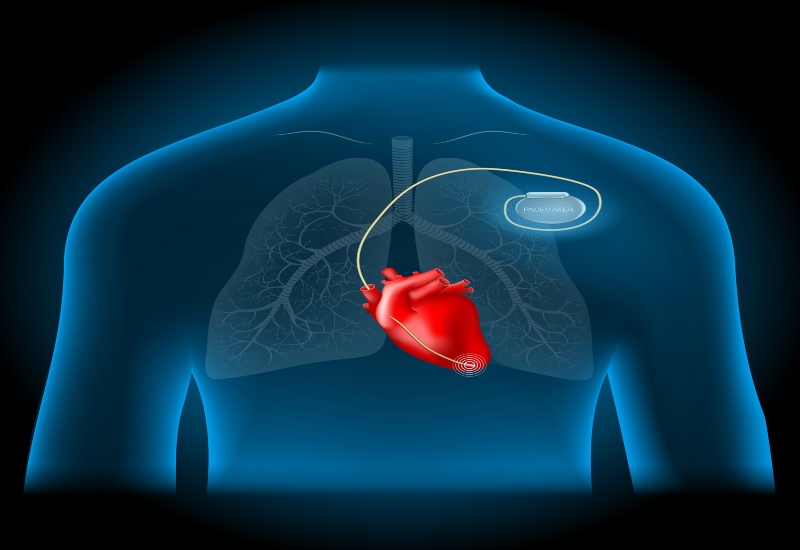
Leadless Pacemaker Procedure and Implantation
Leadless pacemaker implantation is a minimally invasive procedure that generally takes two hours or less to complete. Most patients are discharged from the hospital after one or two days of observation. Here’s what you can typically expect from the process:
- Access Point – A cardiologist inserts a catheter through a vein in the upper thigh.
- Device Delivery – The doctor guides the pacemaker through the vein and into the heart’s right ventricle.
- Attachment – Small tines or a screw mechanism anchor the device to the heart wall.
- Testing – The care team confirms proper placement and pacing function before removing the catheter.
Understanding Leadless Pacemaker Benefits
Leadless pacemaker benefits are especially relevant for patients who face higher risks with traditional devices. Key advantages include:
- No Surgical Pocket – Leadless pacemakers eliminate the risk of pocket-related infections or hematoma.
- No Leads – There’s no possibility of lead fracture, dislodgement, or venous obstruction.
- Reduced Infection Risk – Fewer entry points mean a lower chance of device-related infections.
- Improved Comfort – Recipients have no visible skin bulge and no activity restrictions due to lead positioning.
- MRI Compatibility – Most leadless devices are MRI-conditional, providing physicians with greater diagnostic flexibility.
The Pros and Cons of Leadless Pacemakers
Understanding leadless pacemaker pros and cons helps patients and physicians make informed choices:
Pros
- Shorter recovery time compared to traditional pacemaker surgery
- Lower risk of lead- and pocket-related complications
- No external bump under the skin, ensuring discreetness
- Suitable for patients with limited venous access
Cons
- Currently limited to single-chamber pacing
- Retrieval is more complex than removing a traditional device
- Not appropriate for all pacing indications
- Higher upfront device cost in some settings
Who’s a Good Candidate for Leadless Pacing Therapy?
Leadless pacing therapy isn’t a one-size-fits-all solution. A thorough evaluation will help determine whether this approach is appropriate. Patients who tend to benefit most include those with:
- A need for single-chamber ventricular pacing
- A history of pacemaker pocket infections or complications
- Poor venous access that makes lead placement difficult
- Chronic kidney disease requiring frequent MRI imaging
- Immune system conditions that increase infection risk
Patient Selection Criteria for Leadless Pacemakers
Physicians use specific clinical criteria when evaluating candidates for leadless pacemaker implantation. They typically assess the following factors:
- Pacing Indication – Conditions such as sinus node dysfunction with persistent atrial fibrillation or AV block with low activity demand are common indications that one needs pacing assistance.
- Anatomy – The size and structure of the femoral vein and right ventricle must support safe device delivery.
- Comorbidities – Bleeding disorders, active infections, or certain structural heart conditions may affect eligibility.
- Lifestyle and Longevity – Device battery life and the possibility of future upgrades are considered for younger or more active patients.
The Future of Leadless Pacemaker Technology
Leadless pacemaker technology continues to evolve rapidly. Researchers and device manufacturers are working on:
- Dual-chamber leadless systems that coordinate pacing between the atria and ventricles
- Wireless communication between multiple intracardiac devices
- Extended battery life to reduce the need for device replacement
- Smaller device profiles for patients with limited cardiac anatomy
FAQ About Leadless Pacemaker Therapy
Is a Leadless Pacemaker Safe?
Yes. Clinical trials, including the Micra Transcatheter Pacing Study, have shown that leadless pacemakers are associated with a low rate of major complications and a high rate of successful implantation.
How Long Does a Leadless Pacemaker Last?
Most leadless pacemakers last eight to 16 years, depending on how often the device paces and the patient’s specific settings.
Can a Leadless Pacemaker Be Removed?
Removal is possible, but it’s more complex than removing a traditional pacemaker. Physicians typically attempt retrieval only when medically necessary.
Does a Leadless Pacemaker Require Follow-Up Visits?
Yes. Regular follow-up appointments are necessary to monitor device function, battery life, and overall heart health.
Contact Us for Leadless Pacemaker Therapy Today
The Cardiac Solutions team has the expertise to help you determine whether leadless pacemaker therapy is right for you. Contact us today to schedule a consultation in Glendale, Peoria, Sun City West, or the Southwest Valley.