Cutting-Edge Pacemakers and ICDs in Sun City, Glendale, and Peoria, AZ
The Best Pacemaker and ICD Clinic in AZ
Discover cutting-edge cardiac care here in Sun City, Glendale, and Peoria, AZ with Cardiac Solutions. Our dedicated team of experts is proud to offer top-tier Pacemakers and Implantable Cardioverter Defibrillator (ICD) services to ensure your heart health is in the best hands. We understand the importance of a healthy heart and provide state-of-the-art technology and compassionate care to our community. Whether you seek guidance on pacemaker implantation or need ICD monitoring and support, we’ve got you covered. Take the first step towards a healthier heart today – schedule your consultation with us now. Your heart deserves nothing but the best.
What Are Pacemakers and ICD?
What is the difference between an ICD and a pacemaker? Pacemakers and Implantable Cardioverter Defibrillators (ICD) are medical devices designed to regulate and manage heart rhythm disorders. Pacemakers typically treat slow heart rhythms by sending electrical impulses to stimulate the heart’s natural rhythm. On the other hand, ICD are used for more complex heart rhythm issues. They can deliver electrical shocks to restore a normal rhythm in dangerous arrhythmias or sudden cardiac arrest cases. Both devices are implanted under the skin and connected to the heart through leads, ensuring that patients with these conditions receive essential cardiac support and monitoring.
Why would I need a Pacemaker or an ICD?
You might need a Pacemaker or an Implantable Cardioverter Defibrillator (ICD) if you have certain heart rhythm disorders. Pacemakers are prescribed for individuals with slow heart rhythms (bradycardia) or irregular electrical impulses, helping to maintain a steady heart rate. ICD are recommended for those at risk of life-threatening arrhythmias or sudden cardiac arrest, as they can deliver electrical shocks to restore a normal heart rhythm. Your cardiologist will determine the appropriate device based on your specific heart condition and health needs, ensuring you receive the necessary support and protection for your heart’s optimal function.
Pacemaker and ICD Implementation and Aftercare
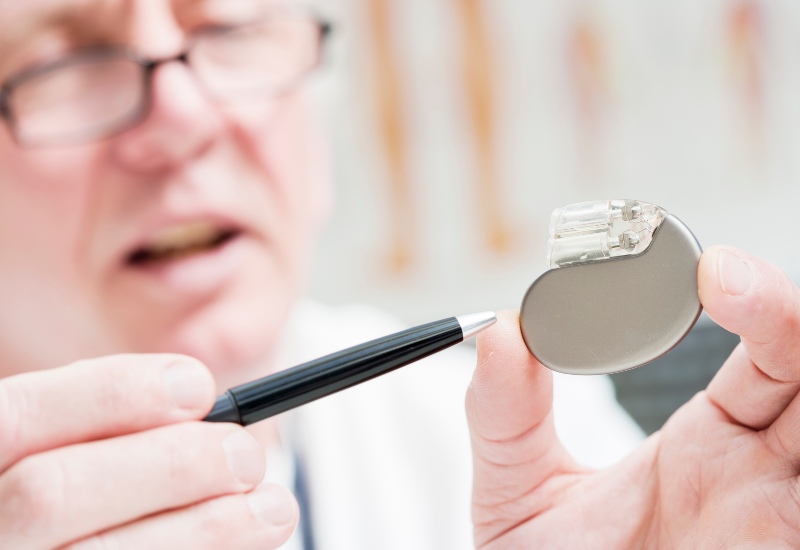
Pacemaker and ICD implementation involves a minor surgical procedure during which the device is placed under the skin, typically near the collarbone, and connected to the heart with leads. Aftercare includes regular follow-up appointments to monitor device performance, adjust settings, and ensure proper functioning. Patients are advised to avoid vigorous activities involving excessive arm movement immediately after implantation. They should also be aware of device precautions and carry an identification card for medical personnel. Regular device checks are essential to assess battery life, lead integrity, and overall performance, ensuring the patient’s heart remains adequately supported and protected.
Types of Pacemakers
There are several types of pacemakers designed to address different cardiac conditions and patient needs. The choice of pacemaker type depends on the patient’s specific heart condition and the treatment goals established by their cardiologist. The main types include:
- Single-Chamber Pacemakers -These devices have one lead (wire) connected to either the right atrium (for atrial pacing) or the right ventricle (for ventricular pacing) of the heart. They are used when only one chamber of the heart needs pacing assistance.
- Dual-Chamber Pacemakers – Dual-chamber pacemakers have two leads, one in the right atrium and another in the right ventricle. They allow synchronized pacing of both chambers, closely mimicking the heart’s natural electrical impulses.
- Biventricular (Cardiac Resynchronization) Pacemakers – Also known as CRT (Cardiac Resynchronization Therapy) pacemakers, these devices have three leads: one in the right atrium and two in the right ventricle and left ventricle. They are used for patients with heart failure and can improve the coordination of heart contractions.
- Leadless Pacemakers – These innovative pacemakers are entirely self-contained within the heart, eliminating the need for leads. They are implanted directly into the heart’s right ventricle and offer a minimally invasive option.
- Rate-Responsive Pacemakers – These pacemakers adjust the heart rate in response to physical activity or emotional stress. They suit individuals whose heart rate needs to adapt to varying circumstances.
Why Choose Us
Elevate your heart health with Cardiac Solutions‘ top-tier Pacemaker and ICD services in Sun City, Glendale, and Peoria, AZ. Our dedicated team of experts specializes in implantable devices to manage heart rhythm disorders. Beyond Pacemakers and ICD, we offer a comprehensive range of cardiac care, including Cardiac Ablation, Arrhythmia management, and more. Don’t wait to take control of your heart health – schedule your consultation today.
Pacemakers and ICD FAQs
Device longevity depends on several factors, including the type of device, battery capacity, how often the device delivers therapy, and each patient’s heart condition. Many pacemakers remain functional for approximately 5 to 10 years before a generator replacement becomes necessary, whereas ICD battery life often varies with device activity and programming. Regular follow-up appointments allow your provider to evaluate battery status and device performance long before replacement is needed.
Recovery following ICD implantation or pacemaker surgery is generally straightforward for most patients. The procedure involves a brief recovery period during which the incision site heals, and the device settles into position. Mild soreness, swelling, or tenderness near the implant location may occur for a short time. Most people return to normal daily activities within a few weeks, following their provider’s recommendation. Temporary limiting may help protect the device leads during the healing process.
Many people with a pacemaker or ICD enjoy active, productive lifestyles following implantation. These devices manage abnormal heart rhythms and support safer heart function during daily activities. Patients often return to work, exercise according to their physician’s guidance, travel, participate in social activities, and enjoy hobbies after recovery.
Most household electronics and consumer devices can be used safely by people with pacemakers or ICDs. Smartphones, computers, televisions, kitchen appliances, and wireless technology generally don’t interfere with properly functioning cardiac devices when used according to the manufacturer’s recommendations. Patients may receive guidance regarding strong magnetic fields and specialized industrial equipment. Modern devices include sophisticated shielding and design features that help minimize interference from everyday electronics.
Routine monitoring will help ensure the performance and safety of an ICD or pacemaker. Initial follow-up visits often occur shortly after implantation, while ongoing monitoring schedules vary according to the device type and each patient’s clinical needs. Many pacemaker patients transition to annual evaluations, while ICD patients may require more frequent assessments.
If the device delivers a shock, many patients describe the sensation as sudden and noticeable. The experience varies from person to person and depends on the type of rhythm being treated and individual sensitivity.
Absolutely. Individuals with slow heart rates may experience increased energy, improved exercise tolerance, reduced dizziness, and greater physical comfort after implantation. Patients who require an ICD often gain reassurance from knowing the device continuously monitors for irregular arrhythmias.
A pacemaker may be recommended when the heart’s electrical system cannot maintain an appropriate heartbeat on its own. Common conditions include bradycardia, which causes the heart to beat too slowly, sinusitis syndrome, and certain forms of heart block that disrupt the normal electrical signals traveling through the heart.
Our Reviews
Cardiac Solution has been very easy to deal with, the Doctors explain everything so | can understand, very professional and kind
The staff and Doctors show complete and concern for my heart health. They are always kind and caring, they listen to my questions and don't give the feeling of I need to hurry with my appointments. They always explain in turns that you can understand so that you can make the proper decision in your heart health.
Cardiac Solutions runs like a well oiled machine. Everyone works together for a great end result. Never a scheduling problem and the wait time from walkin to seeing the doctor is 10 to 15 min. You just can't beat that. Not a grouchy employee in the office. All seem to really like their job and it shows. Thank you for making my last visit a great experience.
Cardiac Solutions is staffed with the BEST...Docs, technologists, and all other personnel that | have come in contact with over the past 8+ years! | HIGHLY recommend them. So great to be treated by professionals who obviously love what they're doing
From the moment you walk in the door youre not by wonderful kind staff the entire experience from front office to Mid office to back office to your doctor visit his wonderful kind very well thought out an entire process is quick and flawless. They truly set the standard that other doctor offices should follow